Plumber Near Me Honolulu: A Homeowner Hiring Guide
Searching for a “plumber near me” in Honolulu usually happens under pressure. A drain backs up before guests arrive. A water heater quits at the worst possible hour. A leak shows up as a stain on a wall, and nobody in the house knows how long it has been there. In those moments, it is tempting to call the first name that appears, ask how fast they can come, and hope the bill is fair.
That approach sometimes works. It also leaves too much to chance.
Plumbing in Honolulu is not casual handyman territory. The City and County of Honolulu plumbing code applies to the design, installation, alteration, repair, relocation, replacement, addition, use, and maintenance of plumbing systems. That is broad by design. It covers far more than new construction and major remodels. Work involving plumbing, drainage piping, fixtures, gas appliances, water-heating equipment, and water-treating equipment may require permits depending on the scope. Electrical and plumbing work must be performed by contractors licensed by the State of Hawaii, and the state maintains a way to verify license status, expiration dates, and disciplinary history.
For a homeowner, that legal framework changes the hiring question. You are not only asking, “Who can fix this?” You are asking, “Who is qualified to touch this system, stand behind the work, and handle the permit and inspection side when required?”
A good plumber Honolulu homeowners can rely on should be able to answer those questions without acting offended that you asked.
Why hiring a licensed plumber matters in Honolulu
A plumbing system is part of the safety infrastructure of a home. It manages potable water, wastewater, drainage, fixtures, and equipment that can affect health, property, and long-term building performance. A quick repair that ignores code requirements can create bigger problems later, especially if the work is concealed inside a wall, below a slab, behind cabinets, or tied into drainage or water-heating equipment.
Honolulu’s rules recognize that plumbing work has consequences beyond the immediate fixture. The plumbing code gives the authority having jurisdiction the ability to verify that inspected work was performed by a licensed plumbing journey worker and/or contractor. That point matters because some projects are not just about whether water flows when the job is done. They are about whether the work was performed by someone legally qualified, whether the required inspection process can be completed, and whether a future buyer, insurer, property manager, or building official can have confidence in the installation.
The State of Hawaii’s licensing structure also gives homeowners a practical tool: you can check whether a plumber or contractor is properly licensed, whether the license is current, and whether disciplinary history is listed. That is not a substitute for judgment, but it is a strong first filter. A polished website or friendly phone manner cannot replace proper licensing.
When you ask a plumber Oahu homeowners recommend whether they are licensed, the answer should be direct. If the response is vague, if they say a license is unnecessary for work that clearly involves plumbing, or if they pressure you to skip permits because “nobody checks,” that is a warning sign. Permits are not merely paperwork. In Honolulu, permits are part of how certain plumbing-related work is reviewed, tracked, and approved.
The difference between a repair, a replacement, and permitted work
Homeowners often think of plumbing work in terms of inconvenience. The toilet will not flush. The shower valve drips. The water heater does not produce hot water. The kitchen sink drains slowly. From the homeowner’s side, these feel like repairs.
From the code and permitting side, the scope matters. Installing, removing, altering, repairing, or replacing plumbing, drainage piping, fixtures, gas appliances, and water-heating or water-treating equipment falls into the category of work that may require permits under Honolulu rules. That does not mean every minor service call has the same level of review. It does mean homeowners should not assume that a job is permit-free simply because it looks small.
A simple example is water heater repair. If the issue is diagnostic or involves a limited service adjustment, the process may be different from replacing water-heating equipment. If equipment is removed, replaced, or altered, the licensing and permit questions become more serious. The same distinction can apply to fixtures, drainage piping, and other components. The right plumber should understand where routine service ends and regulated work begins.
This is one reason the cheapest quote can become expensive. A person who is not prepared to deal with permits may bid low because the bid leaves out responsibilities that a licensed contractor must include. The final cost of doing the job correctly may not be reflected in the first number you hear.
How to read “plumber near me” results with a cooler head
Local search results are useful, but they are not a licensing screen. When you type “plumber near me” or “plumber Honolulu,” you are seeing a mix of businesses, ads, maps, directories, and reviews. Proximity helps when a pipe is leaking, but it should not replace verification.
A good starting point is to separate marketing claims from verifiable facts. “Fast,” “trusted,” and “affordable” are claims. A current State of Hawaii license is a fact. Experience with the type of work you need is a fact if the contractor can discuss the work intelligently. A willingness to explain permit responsibility is meaningful. A refusal to put scope and pricing in writing is meaningful too, but in the wrong direction.
Reviews can be helpful if you read them for patterns rather than stars alone. Look for comments about communication, cleanup, showing up when promised, explaining options, and dealing with problems after the invoice was paid. A plumber who has handled both straightforward drain cleaning and more involved sewer line repair should be able to describe how they diagnose before they dig, replace, or open walls. You are listening for method, not memorized sales language.
For emergency work, the decision window is shorter. You may not have time to interview three companies while water is moving across the floor. Even then, you can ask for the basics: company name, license information, service fee or dispatch charge if any, the hourly or flat-rate approach, and what happens if the work requires a permit or a follow-up appointment. A legitimate emergency plumber should be used to those questions.
Questions to ask before you authorize the work
A calm five-minute conversation can prevent days of frustration. Ask plainly and take notes. If the situation is urgent, ask the questions while also taking practical steps such as shutting off water to the affected fixture or area if you know how to do so safely.
- Are you licensed in the State of Hawaii for this type of plumbing work, and what name should I use to verify the license?
- Does this job require a Honolulu permit or inspection based on the scope you are proposing?
- Will the person performing the work be properly qualified, and who is responsible for supervising the job?
- Will I receive a written scope that separates diagnosis, repair, replacement, parts, labor, and any permit-related costs?
- If you discover hidden conditions, how will you price and approve additional work before proceeding?
Those questions are not aggressive. They are normal homeowner due diligence. Professional contractors hear them often and usually appreciate a customer who understands that proper work involves more than arriving with tools.
The third question is especially important on larger jobs. The Honolulu plumbing code allows verification that inspected work was performed by a licensed plumbing journey worker and/or contractor. You do not need to master every licensing category to protect yourself, but you should know who is doing the work, who is responsible for it, and whether the company is prepared for inspection if required.
Emergency plumber calls: what can wait and what cannot
Plumbing emergencies are defined by risk. Active water release, sewage backup, failed equipment that affects safe use of the home, and conditions that may damage walls, floors, cabinets, or electrical systems deserve immediate attention. Slow drips and weak pressure may still require service, but they may not carry the same urgency as a sudden leak or backup.
When calling an emergency plumber, describe the condition as specifically as possible. “The upstairs bathroom ceiling is dripping below the toilet area” tells the dispatcher more than “we have a leak.” “Only the kitchen sink is backing up” is different from “multiple drains are backing up.” “The water heater has stopped producing hot water” is different from “water is coming from the water-heating equipment area.”
Precise descriptions help the plumber decide what tools, parts, and staffing may be needed. They also help avoid false expectations. Some emergency calls are stabilized first, then repaired permanently later. If a leak detection visit identifies a concealed problem that requires opening finished surfaces or replacing piping, the emergency portion may be only the first stage. That is not necessarily poor service. It may be the correct way to limit damage while keeping permitted work and inspections in order where required.
A professional should be clear about the difference between temporary stabilization and completed repair. If they shut off a line, cap a section, clear a stoppage, or restore basic function, ask what remains to be done and whether any follow-up work falls under permit requirements.
Water heater repair and replacement decisions
Water-heating equipment sits at the intersection of comfort, plumbing code, and cost. When hot water fails, homeowners often want a quick yes-or-no answer: repair it or replace it. The honest answer depends on diagnosis, equipment condition, availability of parts, installation details, and whether the work involves removing, altering, repairing, or replacing water-heating equipment.
A qualified plumber should inspect before recommending a path. Some issues may be serviceable. Others may point toward replacement, especially if the equipment is at the end of its useful life or if repair would only delay a near-term failure. Because Honolulu rules specifically include water-heating equipment in plumbing-related work that may require permits, you should ask early how the contractor handles permitting for replacement or significant alteration.
Be cautious with quotes that treat water heater replacement as a simple drop-in commodity. The equipment is only part of the job. The installation, connections, code compliance, permit handling, and inspection readiness matter. A low price that excludes required steps may not be a bargain.
For homeowners in attached housing, multifamily buildings, or properties with association rules, coordination may add another layer. That is not a special Honolulu code claim, just a practical reality of shared buildings. Ask whether the plumber has enough information about access, shutoffs, equipment location, and building requirements before scheduling.
Drain cleaning: useful service, not a magic cure
Drain cleaning is one of the most common reasons people call a plumber. It can solve many immediate stoppages, but it should not be treated as a permanent answer to every recurring drain problem. A sink that clogs once after heavy use is one thing. A line that backs up repeatedly after being cleared may point to a deeper issue in the drainage piping or sewer connection.
The value of a professional plumber is not only in clearing the line. It is in knowing when a stoppage deserves further investigation. If multiple fixtures are affected, if wastewater returns through low drains, or if the same line has needed repeated service, a responsible plumber should discuss what they suspect and what the next diagnostic step might be. That conversation may lead toward additional evaluation, and in some cases toward sewer line repair.
Honolulu’s wastewater guidance emphasizes protecting sewer infrastructure, and sewer connection and related wastewater issues involve city review and permitting processes. That does not mean every clogged drain is a city matter. It does mean work tied to sewer connections and wastewater infrastructure should be handled carefully, with attention to proper review when the scope reaches that level.
A homeowner should expect straight language. “We cleared it today, but the pattern suggests a bigger issue” is useful. “You are fine forever” after a quick cleaning is less convincing, especially if the same problem has happened several times.
Leak detection: patience beats guesswork
Leak detection rewards discipline. Water travels. A ceiling stain may appear several feet from the source. A damp cabinet may come from a fixture, a supply line, drainage piping, or something nearby. Guessing can lead to unnecessary demolition and missed repairs.
A skilled plumber starts by narrowing the possibilities. They ask when the leak appears, whether it happens only during fixture use, whether it is constant, whether hot or cold water seems involved, and whether any recent work has occurred. They may isolate fixtures or sections of the system before recommending opening walls or ceilings. Homeowners sometimes get impatient with this process because they want immediate certainty. The better plumbers resist false certainty.
The permitting question can appear after diagnosis. If the repair involves altering, replacing, or relocating plumbing or drainage piping, fixtures, or related equipment, the contractor should be able to explain whether a permit is required and who will obtain it. The key is sequencing: diagnose carefully, stabilize if needed, define the repair, then handle the required approval process.
One practical homeowner habit helps: photograph visible damage and keep notes on timing. If water appears only after a shower runs for ten minutes, say that. If it appears even when nobody has used water for hours, say that too. Good information saves time.
Sewer line repair and city review
Sewer line repair is not a job to treat casually. It can involve drainage piping, wastewater flow, property disruption, and connection-related issues that may require review and permitting. Honolulu wastewater guidance emphasizes the importance of protecting sewer infrastructure, and sewer connection matters are tied to city processes.
For homeowners, the first step is understanding whether the plumber is diagnosing a private-side problem, a connection issue, or something that may involve city review. You do not need to solve that yourself. You do need a plumber who can explain the distinction and avoid making promises before the problem is properly located and the required process is understood.
Sewer work can also expose the difference between a service company and a contractor prepared for regulated repair. Clearing a line is one scope. Replacing or altering drainage piping is another. If excavation, pipe replacement, or connection work is being discussed, ask directly about permits and inspections. A qualified plumber should not treat those topics as afterthoughts.
Be wary of scare tactics. Sewer problems can be serious, but homeowners deserve clear findings, a written scope, and an explanation of alternatives where alternatives exist. Sometimes the immediate need is to restore flow. Sometimes the long-term answer is repair. Sometimes further review is needed before the final scope is known. The contractor’s job is to guide you through that without hiding uncertainty.
When you need a commercial plumber instead of residential service
Some properties need more than standard residential service. A commercial plumber may be appropriate for businesses, larger buildings, projects involving more complex water service, or properties where plumbing work intersects with broader building systems and permitting review. Honolulu Board of Water Supply materials note that large commercial developments often require master plans and more complex review of water-system capacity. That is a different environment from replacing a single fixture in a house.
Commercial plumbing also tends to involve scheduling constraints, tenant coordination, business interruption, and documentation needs. The contractor may need to communicate with property managers, project teams, inspectors, and water-service or permitting offices. If you own or manage a commercial property, ask whether the plumber has experience with the type of occupancy and the scale of work, not merely whether they are willing to take the call.
For mixed-use or multifamily properties, the line can blur. A unit owner may think of the problem as residential, while the building’s plumbing configuration or association requirements make coordination more complex. Before authorizing work, clarify access, shutoff responsibility, documentation, and who approves changes that may affect shared systems.
Price, estimates, and the cost of doing it twice
Plumbing prices vary because scopes vary. A drain cleaning call is not priced like sewer line repair. Leak detection may be a diagnostic service rather than a fixed repair. Water heater repair can range from a service visit to equipment replacement. Permit handling, inspections, accessibility, after-hours response, and hidden conditions all influence cost.
The mistake is comparing numbers without comparing scope. One plumber may quote only the visible task. Another may include permit-related steps, proper materials, cleanup, and inspection readiness. The second number may be higher but more complete. That does not mean the higher bid is automatically better. It means you need enough detail to compare fairly.
A written estimate should make clear what is included, what is excluded, and what conditions could change the price. If the plumber cannot know the full scope until a wall is opened or a line is inspected, the estimate should say so. Uncertainty is acceptable when it is disclosed. Surprise charges are harder to defend when the possibility was obvious from the start.
There is also a cost to delay. A minor leak can damage finishes. A recurring stoppage can become a larger disruption. A failing water heater can interrupt daily life. Still, speed should not erase judgment. The goal is prompt, lawful, competent work.
Red flags that deserve attention
Most homeowners sense when a contractor conversation feels wrong, but it helps to name the warning signs. One red flag by itself may not prove a problem. Several together should make you pause.
- The plumber avoids giving a license name or tells you verification is unnecessary.
- The company dismisses permit questions for work involving replacement, alteration, or regulated equipment.
- The scope is verbal only, even when the work is more than a minor service call.
- The price changes before any hidden condition is discovered or explained.
- The contractor pressures you to approve major work immediately without diagnosis.
A professional plumber does not need to frighten you into a decision. Urgency may be real, especially with leaks and wastewater backups, but urgency and pressure are not the same. Good contractors explain risk, stabilize what they can, and give you clogged drain cleaning a path forward.
What a good Honolulu plumbing visit feels like
A solid service visit has a rhythm. The plumber listens first, asks a few targeted questions, inspects the area, and explains what they can and cannot determine immediately. If the job is simple, they describe the repair and price before starting. If the job is more complex, they define the diagnostic step and explain how the findings will shape the repair.
They also respect the regulatory side of the work. If a permit may be required, they say so. If inspected work must be performed by properly licensed people, they do not make that sound like an inconvenience. If the scope changes from repair to replacement, they revisit the paperwork and approval process.
Homeowners notice small professional habits too. Protecting work areas, communicating delays, labeling shutoffs when relevant, cleaning up, and documenting what was done all signal seriousness. None of those habits replace licensing, but they often travel with contractors who take pride in the trade.
A homeowner’s best advantage is preparation
You cannot predict every plumbing failure, but you can prepare for the hiring decision before stress takes over. Know where your main shutoff is. Keep basic information about your water-heating equipment accessible. Save the names of licensed contractors you have vetted before an emergency. When you have work done, keep invoices, permits where applicable, and inspection documentation with your home records.
The next time you search for “plumber near me,” use proximity as only the first filter. In Honolulu, the better filter is qualification. Look for a plumber who is licensed in Hawaii, understands the City and County of Honolulu plumbing code, can discuss permits when the work involves installing, removing, altering, repairing, or replacing regulated systems or equipment, and communicates clearly enough that you know what you are approving.
A dependable plumber Oahu homeowners can trust is not just someone who arrives quickly. It is someone who understands that every repair sits inside a larger system: your home, the public health purpose of plumbing codes, the city’s permitting process, and the long-term value of work done correctly.
Name: P&S Plumbing
Address: 1714 Homerule St Bay 1, Honolulu, HI 96819, United States
Phone: 808-842-0345
Website: https://www.psplumbinghawaii.com/locations/honolulu/
Email: [email protected]
Hours:
Sunday: Open 24 hours
Monday: Open 24 hours
Tuesday: Open 24 hours
Wednesday: Open 24 hours
Thursday: Open 24 hours
Friday: Open 24 hours
Saturday: Open 24 hours
Time zone: Hawaii-Aleutian Time
Open-location code / Plus code: 84F8+HP Honolulu, Hawaii, USA
Map/listing URL: https://www.google.com/maps/search/?api=1&query=Google&query_place_id=ChIJl_3qEMhvAHwRtgTEMKE27zE
Embed iframe:
Socials:
https://www.facebook.com/psplumbinghonolulu/
https://x.com/PSPlumbingoahu
https://www.youtube.com/@PSPlumbingHonolulu/
https://soundcloud.com/p-s-plumbing-honolulu
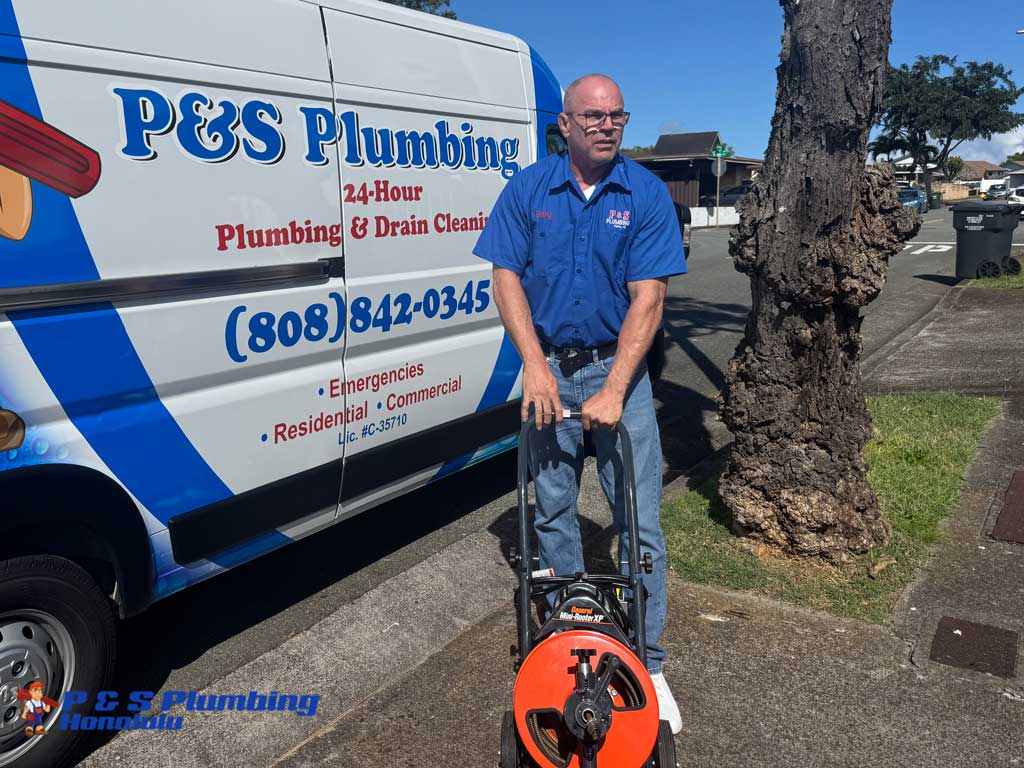
P&S Plumbing provides plumbing services from its Honolulu location on Homerule Street.
The official Honolulu page lists drain cleaning, plumbing repairs, water heater repair, water heater installation, sewer line repair, and 24-hour emergency plumbing services.
P&S Plumbing serves residential and commercial customers across Honolulu and Oahu, including Kalihi, Kakaako, Ala Moana, Waikiki, Moiliili, Makiki, Manoa, Aliamanu, Aiea, Pearl City, Waipahu, Ewa Beach, Kapolei, Hawaii Kai, and nearby communities.
The Honolulu shop is listed at 1714 Homerule St Bay 1, Honolulu, HI 96819, near Kalihi and local routes serving central Honolulu.
The official website lists Hawaii State License Number CT-35710 and describes the company as licensed and insured.
Customers can contact P&S Plumbing for drain cleaning, hydro jetting, leak detection, water heater service, sewer line repair, fixture repair and installation, kitchen plumbing, bathroom plumbing, commercial plumbing, residential plumbing, and emergency plumbing needs.
For plumbing service in Honolulu and Oahu, call 808-842-0345 or visit https://www.psplumbinghawaii.com/locations/honolulu/
The public map listing uses plus code 84F8+HP Honolulu, Hawaii, USA and can help customers find P&S Plumbing near Homerule Street in Honolulu.
Popular Questions About P&S Plumbing
What does P&S Plumbing provide in Honolulu?
P&S Plumbing provides drain cleaning, plumbing repairs, water heater repair and installation, sewer line repair, hydro jetting, leak detection, fixture repair and installation, bathroom plumbing, kitchen plumbing, residential plumbing, commercial plumbing, and 24-hour emergency plumbing services.
Where is P&S Plumbing located in Honolulu?
P&S Plumbing is listed at 1714 Homerule St Bay 1, Honolulu, HI 96819, United States. The official website also lists the address as 1714 Homerule Street 1, Honolulu, HI 96819.
What phone number should Honolulu customers call?
The official Honolulu page and contact page list 808-842-0345 for Honolulu-Oahu service.
What is the email address for P&S Plumbing?
The email address is [email protected].
What are P&S Plumbing’s Honolulu hours?
The official Honolulu page and supplied listing show P&S Plumbing as open 24 hours a day, seven days a week, Hawaii-Aleutian Time.
Is P&S Plumbing licensed?
The official Honolulu page lists Hawaii State License Number CT-35710. Customers can confirm license status directly with the relevant Hawaii licensing authority before hiring.
Does P&S Plumbing offer emergency plumbing in Honolulu?
Yes. The official Honolulu page lists 24-hour emergency plumbing services for urgent plumbing issues.
Does P&S Plumbing handle water heaters?
Yes. The official Honolulu page lists water heater repair, water heater installation, tankless water heater installation, solar water heater installation, and traditional water heater installation.
Does P&S Plumbing provide commercial plumbing?
Yes. The official Honolulu page lists commercial plumbing services along with residential plumbing services.
How do I contact P&S Plumbing?
Call 808-842-0345, visit https://www.psplumbinghawaii.com/locations/honolulu/, or use the map URL: https://www.google.com/maps/search/?api=1&query=Google&query_place_id=ChIJl_3qEMhvAHwRtgTEMKE27zE. Social profiles: Facebook, X, YouTube, and SoundCloud.
Landmarks Near Honolulu, HI
Homerule Street: The street listed for P&S Plumbing’s Honolulu location and a practical reference point for finding the shop.
Kalihi: A central Honolulu area near Homerule Street with homes, businesses, warehouses, and local service routes.
Dillingham Boulevard: A major nearby corridor serving Kalihi, Iwilei, Honolulu Harbor, and surrounding business areas.
Nimitz Highway: A key Honolulu route connecting the airport, harbor, downtown, and central business districts.
H-1 Freeway: A major Oahu highway used to reach Honolulu neighborhoods and communities across the island.
Honolulu Harbor: A major commercial waterfront landmark near downtown and industrial service areas.
Daniel K. Inouye International Airport: A major transportation landmark west of central Honolulu and near key Oahu service routes.
Downtown Honolulu: A central business and residential district served by local plumbing contractors.
Chinatown Honolulu: A nearby historic district with restaurants, shops, apartments, and older plumbing infrastructure.
Iwilei: A nearby commercial and industrial area with warehouses, retail properties, and service businesses.
Kakaʻako: A growing residential, retail, and commercial district southeast of downtown Honolulu.
Ala Moana Center: A major Honolulu retail landmark and citywide reference point.
Waikiki: A major visitor, hotel, condo, and residential area within P&S Plumbing’s broader Honolulu service area.
Moanalua: A Honolulu community listed within P&S Plumbing’s broader Oahu service-area references.
Pearl Harbor area: A major Oahu landmark west of Honolulu and near residential and commercial service routes.
For drain cleaning, plumbing repairs, water heater service, sewer line repair, hydro jetting, leak detection, fixture installation, commercial plumbing, residential plumbing, or 24-hour emergency plumbing near these Honolulu and Oahu landmarks, contact P&S Plumbing at 808-842-0345 or visit https://www.psplumbinghawaii.com/locations/honolulu/